All posts by Brad

Rome and Driving in Italy!

Rome, the city that laid the foundation for our modern civilization. Rome, the home of some of the most vicious tyrants and emperors in history. After flying to Rome and settling into our apartment, we go to our first tour for Rome. Since Rome’s attractions can be very far apart, We booked a golf cart tour to see the monuments that are very far from our place. On the tour, we saw a water level gauge that showed the flood water height of the Tiber river. Since all main cities had to be right by a main river (Rome was no exception), the city had its share of large floods, the latest being in the late 1800s! Because of the massive floods as well as fires creating debris, modern Rome is 25 feet above the street level of ancient Rome. Our tour guide described it perfectly, “Rome is like one big lasagna”.

There are little fountains that just pop up in small squares all across Rome. Completely drinkable water constantly runs out of a faucet for filling up bottles, but when you want to just take a drink, you plug the hole the water comes out of, and the pressure forces water through a much smaller hole on the top of the faucet, making a perfect drinking spout.

We went on a private tour of the Roman Colosseum. The Colosseum is made up of 4 different walls, each supporting a separate section of viewing areas. The closest section of seating in the arena, is reserved for the Emperor and his family, as well as Senators. The second closest area was for teachers and knights. The third closest area was for the middle or working class, while the furthest area with seating was for the women (of all classes).

In the evening, we went on a food  tour of Rome. We visited a few of the shops, an example is the bakery we went to where you order pizza by telling them with hand gestures how big of a slice you want. After that, they take a massive knife, and chop of a section from a 4-5 foot long flatbread style pizza. However, if you order pizza in a restaurant, it will be a full 10” very thin crusted pizza, meant for one person.

One of the 3 districts we visited on the food tour, is the Jewish Ghetto of Rome. This specific Ghetto is the oldest European residence for Jews, and that area is where the word “ghetto” originated. The Jewish district is about 2000 years old, the first residents arriving from Jerusalem as captives of war (slaves) in 70 AD. These were the slaves that built the Colosseum and other great buildings in its time. Over the centuries, the Jewish Ghetto was plagued with diseases thanks to regular floods from the polluted Tiber river (Rome’s source of water and sewage drain). On top of all of that, the whole area was walled in and gates were locked from just after sunset to one hour before sunrise. Thankfully, the walls and gates were all knocked down in the 17th century, but for over 1700 years, the Jewish Ghetto was separated from the rest of Rome. At the Ghetto, we saw gold blocks installed into the pavement, these were to commemorate people of Jewish heritage that were taken by the Nazis during WWII and that never returned. Today, the Jewish “Ghetto” is one of the cleanest and safe places to live in Rome. We ate Mozzarella , rolled in rice, dipped in a tomato sauce, and then deep fried. Needless to say, it was really good! We finished our tour across the river where we had a traditional pasta with bacon and tomato sauce, and fresh homemade gelato.

The next day, we picked up our rental car and left the historically rich city of Rome, and drove a few hours into the Italian country side. Our destination was an Agritourismo in Umbria, a small village with many farms surrounding it in all directions. An Agritourismo is a special licence given to people that want to have a B&B attached to a fully functioning farm. Our host described it perfectly, “in Canada, you can do anything unless it’s against the law, but in Italy, you can’t do anything unless it is approved by the government.” This system makes doing anything a lot more complicated than in Canada. This specific farm has a restaurant attached to the main house, so we ate there for dinner. We had a home grown rooster, as well as stinging nettle ravioli. Once the leaves of the stinging nettle plant have been cooked, they don’t sting anymore and it tasted somewhat like spinach.

While staying in Umbria, we went to a cooking class hosted by the B&B, where we learned how to make an Italian custard cake, some Tagliatelli pasta, some ravioli pasta, and a special dish where you take two sheets of pastry, and put a filling of your choice (tomato and goat cheese) in between. We also went on a tour to see our host’s solar power farm. It consists of over 900 separate panels that make a combined 180 KW of power. All that power is then put back into the electrical grid to power other peoples homes. Also on the farm is a natural spring that produces water for watering crops, as well as supplying water for the residence.

What I loved about Rome, was the overabundance of ancient buildings and sights to see. I really enjoyed Umbria, especially the rustic, local feel that is not affected by tourism yet!

The Island of Mykonos

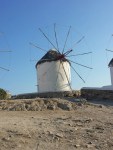
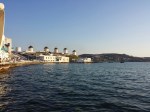
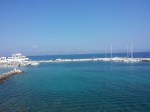
As I sit in my lounger by the pool, I look out at the Aegean Sea as a large yacht sails through the bay and into open waters. The infinity pool is still and as calm as a mirror, almost blending into the darker blue waters of the bay beyond. This is not what you think of when you picture Mykonos, the island known for its many bars and clubs. However, our hotel has the rare addition of being connected to one of the last undeveloped beaches on Mykonos. Surprisingly, there are not many main tourist attractions on the island (apart from the famous Mykonos wind mills) so we happily stayed at the hotel’s pool for the majority of our stay. One of our few outings was to the windmills, primarily used to grind wheat, they were built by the Venetians in the 16th century and has been used since then until the mid 20th century.

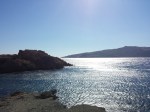
Originally there were 17 windmills, but only 7 stand today. Our other outing was to the only publicly accessible undeveloped beach where there are lots of big rocks that are really fun to snorkel through. We even found a second beach that can only accessed by swimming there, making it very quiet.

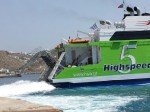
When I got on my first Greek ferry I was surprised. It had granite flooring, spacious staircases, many small bars and snack stands, and was very clean. This styling was not only in the first class area, but throughout all of the large ship. This is very unlike the minimalistic decor of BC ferries. The differences continue when embarkation and disembarkation are concerned. While BC ferries take half an hour to unload at a stop, the Greek ferries take an astounding 5 minutes at quiet stops! This is achieved by simultaneously turning the boat to dock, getting all disembarking passengers to the parking area, and lowering the ramp. About 10 seconds after being docked, the gates open and people, mopeds, cars, and trucks all go down the ramp together in a very chaotic manner.

While one is trying to get out of the way of all the vehicles and people exiting, yet more people are clambering to get on the ferry before it leaves. Once most of the people have gotten on the ferry, the ramp leaves contact with the dock, and the ferry speeds away. This mad dash makes you both glad to sit down on the ferry, and glad once you have left it. Therefore I am thankful that none of my family or our luggage has been left behind in the craziness of disembarking our ferry rides. I can’t say that I loved the island of Mykonos as a whole, but our little hotel and beach is really the most relaxing and beautiful of all the places I have been on this trip.

The Island of Paros

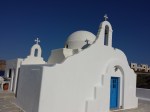
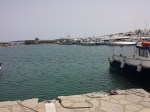
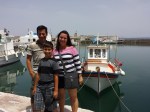
Naoussa, the second largest town on Paros, is what you would think a Greek island town should look like. The port filled with fishing boats, a maze of little shops, and no respect for parking laws, it is the most ideal little Greek island. Both of the days we were there we explored the maze of small streets full of shops and boutique stores. The place where we were staying had a beautiful beach with lots of pretty fish swimming around large rocks not far out into the sea. We also found  a harbour full of little fishing boats, and with the ruins of a watch tower that would have guarded the bay at one time. We also found a small cafe where we had delicious Freddi’s which are essentially mocha Frappuccinos.

On Paros, we purchased a snorkel set so that we could see all the fish that swam between the large rocks. I saw many different kinds of fish, the most unique one was purple, yellow, and white, with blue and green spots. I did not have a waterproof camera with me so I could not take any photos of the fish. Another place we saw was Golden Beach, where the sand is very soft and a vibrant yellow colour. In all, Paros is the most authentic Greek island I have ever experienced, and I loved it!

Marble Mining in Naxos

Our hotel in Naxos is very close to the water so after we had settled into our latest stop, we went for a walk along the coast. We found a gem of a taverna where we were able to have lunch on a deck that was hanging overtop of the sea, it was a very beautiful scene.

Naxos is a big island so when we happened by a car rental place, we went in to rent a car to be able to see all the sights of the island. Outside, Ryan and I saw a very cute Fiat 500 cabriolet (also known as a convertible). Mommy negotiated with them so well that we were able to get it for a lower price than a regular car!

Over the next few days, we saw some very historical places and artifacts. One was an ancient quarry where people mined marble to make all kinds of architecture and statue carving. They would carve out the vague outline of what the final product would look like before dragging it to its final destination. However, if they found any blemishes in the marble, or damaged the piece en route, it would be abandoned in the quarry or at the side of the road, so we saw a few statues with broken legs or feet, just lying on the ground, abandoned by the artist and the miners.

Another historical site we saw was the Naxos gate, this gate stands 20 feet tall, and was the front of what was an ancient Greek temple. The main body of the temple was taken by the Venetians to build themselves a palace. My favourite item was an old style olive press for extracting the oil out of the pits of olives. It is very much like a grape press for wine except that the olives were pressed in goat hair bags because goats’ hair does not absorb the oil. The island is large, so it was really good to have a car to be able to get around! Naxos is also very green, lush, and full of large fruit and olive trees. Naxos is one of the largest Greek islands and there are many sights to see and hikes to do. It is my very favourite of the Greek islands.

Picture Perfect Santorini

Santorini is one of the most picturesque islands in Greece, so Daddy surprised us with a convertible car so that we wouldn’t miss any of the views. One of the places of interest we were able to drive to was a volcanic rock beach where the sand is a black colour. Little walkways have to be put in so you don’t burn your feet on the black sand (black sand retains more heat from the sun than cream or white coloured sand). Another point of interest was an ancient city, perfectly preserved under a few feet of volcanic ash, (almost like Pompei). The civilization of Santorini was very advanced for its day, discoveries have shown that there was an aquaduct system and sewer system that was connected to each house! We then went back and relaxed by the pool in the afternoon before heading out in the evening to see the sunset and go to dinner. The view from the restaurant made it clear why Santorini is the most photographed Greek island.

Island Hopping in Greece!

On Thursday, the 5th of June, our Greek island adventure was about to begin. We started our final day in Athens by packing up from our hotel, where we were picked up by George’s Taxi. He took us to some interesting destinations off the beaten trail, one of which was a full size model of a Athenian warship, while another was a medieval monastery that supported itself by harvesting local honey! After we finished sight seeing, George’s Taxi took us to a delicious and very local taverna to have lunch (yummy zucchini pie), and then to the airport. There, we (and 39 other passengers) were transported to a very small, plane with only 44 seats in total! After we took off, it was less than 30 minutes until we landed in Milos. As soon as we got to our hotel, we went for a walk along the coastline. It was very beautiful and the water was crystal clear, with the sun setting, it was a marvellous and very picturesque sight.

We started our first morning in Milos by waking up to a gorgeous, sunny, and warm day. We woke, packed a backpack, and headed to one of over 70 different beaches on the island. The beach was very unique in the fact that it was less than 4 feet deep for about 300 metres out to sea! The sand was very soft and the water was warm and clear but still refreshing. The next day, we started by exploring some other beaches (one looked like a deserted beach on Mars, while the other had water that was very deep and clear so that you could see to the bottom!). In the end we decided that the beach that we had gone to the day before was the best, so we went back there to relax and swim.

The next morning we caught a ferry to our next island, Santorini. After we had settled into our beautiful room, we went for a walk around the tightly packed, small, hilltop village built by the Venetians. We were going to look for a restaurant the concierge had recommended, but we could only find multiple entrances to Frank’s Cafe. It seemed to us that the cafe was built under the village, because we saw multiple entrances on at least 4 different levels of the village. In the end we did find the small restaurant, but decided that ordering room service would be the best choice. That is how a 10 minute walk to lunch turned into an hour walk around the entire village! Once we had gotten back to our hotel, we went straight into our private plunge pool, which was about 10 feet wide, 10 feet long, and 6 feet deep, so it was just enough room for Ryan and I to play in for 3 hours! Santorini is famous for its sunsets, the volcanic gasses that the island emits turn the last light of the day into all kinds of unique and vibrant colours. So far I am loving Greece, its comfortable temperature, its great food, and beautiful views all make it my favourite vacationing destination (so far)!

Goodbye England, Hello Greece

On Saturday we went to the fun, cool, and interesting London Transport Museum. While there, we were able to see and explore buses and Tube trains from as early as the 1800’s! I noticed that even the earliest buses and coaches were double decker, even back to when they were pulled by horses. After the Transport Museum, we hurried to a guided tour of the British Museum. On the tour we were able to see priceless items such as the Rosetta stone, and the Elgin Marbles (also known as the Parthenon Marbles). After that we took a train out of London to see friends (Maddy and Family) for a delicious dinner.

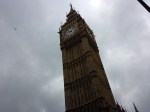
Sunday morning we started early so that we could attend a biking tour of London. I like biking tours because it is not only easier to bike then to walk, but you get to see many more interesting things in a shorter period of time! We saw the Changing of the Guard, Buckingham Palace, the London Eye, and Big Ben, to name a few.  After the wonderful tour had ended, we took the tube home where we started packing for Greece.
The next day, we boarded the plane for Athens. After checking into our hotel, we went for a walk around the area where we were staying, and found a Marks and Spencers just like England! We woke up the next morning early and went on a free walking tour around Athens. On the tour I learned about the different columns that the Greeks used to build their structures, the most popular style is the Corinthian column, where there are lots of curly ques and waves at the very top of the column. The simplest is the Doric column, this style is a series of square plates that start small and grow to a large square. The rarest type of column is the Ionic style column, which consists of two swirls on either side of a triangle. My personal favourite style is the Ionic column, because it combines simplicity with complexity!
On our 2nd full day in Athens, we went for a food walking tour of the city. On the tour we tasted Koulouri (what locals have for breakfast), halva (a sweet Turkish desert adopted by the Greeks), and many smaller tastings of Greek olives, Feta cheese, and assorted meats. I really enjoyed learning the back stories behind some of the foods, and about the controversial authenticity of certain “Greek” foods. For example, did you know that Baclava, regarded as a Greek dessert, is actually Turkish, adopted by the Greeks during the time the Turks ruled here!
We (my family and I) have found that we really do love Greece, and I am looking forward to tomorrow, as we fly to Milos, the first of five Greek island stops. Milos is a beautiful paradise that has many costal rock formations sand caves. I am most looking forward to swimming in the crystal clear warm water!

Starting our trip in London!

Sunday at 9:30 PM was when our flight left the terminal, but for all of Sunday morning and afternoon, every minute seemed like an hour. When our flight finally took off, it was 10:00 PM (Vancouver time), and we landed at 7:00 AM, on Monday the 26 of May. On Tuesday, we met up with a family that we met in London. We went to Kew gardens with them where we visited all the main attractions that my family and I had come to so often to when we were in London before. On the way back to our house we had rented for the week, we walked past our old house, to see that it had not changed one bit!

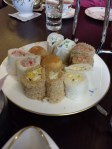
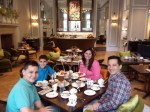
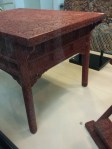
The next day, we slept in (because of jet lag) and then took the tube from Kew Gardens where we were staying, to the Victoria and Albert Museum. We walked from there to the Rosebury afternoon tea house at the Manderine Oriental, needless to say it was delicious! After the tea, we went to a introductory walking tour of the Victoria and Albert Museum, where we were able to see artifacts from ancient Asia. Some of the articles included kimonos worn by high status men and women of society. Another piece was a table from the Forbidden City in China, to make it one had to apply over 300 coats of lacquer, each coat taking 3 – 4 days to dry. Only then could the carvers carve into the lacquer to make all sorts of ornate designs and patterns, without even touching the wood. In an adjoining room, we learned about the different possible methods for “staining” glass. One method is to colour the glass by laying the  newly formed glass on a table and painting on different chemicals, once dried the chemicals are washed off leaving a red tint in the glass. Another way is to literally paint the glass, this lets less light through, but it is much easier and less expensive. The last and most popular version is made by adding powdered rock and metal into the molten silica to give artists access to all the colours of the rainbow! We then had a delicious dinner with another family (Bethan and family) we met whilst in London.

On Thursday (day 3), We got an early start and went to the Churchill War Rooms or the CWR. The CWR was where Churchill directed all the operations to try and stop a Nazi invasion by Hitler! As we walked through, we got to see the rooms as they were when they were occupied. When the war was over, Churchill and his officers got up and left the bunker, never to return, so when you walk through the main planning room you can still see Churchill’s iconic cigar resting on the ashtray. Another rather surprising aspect of the “bunker” is that it was never a purpose built bunker, but a large basement that later received a 6 foot thick slab of steel and concrete bomb barrier. However, the CWR’s most powerful weapon was secrecy, the Germans never knew about the exact position of the shelter, and there are still rumours that there are secret passageways leading to a whole different level of the bunker, but these claims are denied by the British Parliament Authorities.

After the CWR, we went to a London walking tour of the Blitz during WWII. The Blitz is the name given to the bombing raid campaigns headed by the Germans from 1940 – 1941. On the tour we saw many areas that had been completely levelled thanks to the consistent bombing, most of what we saw were churches that had either been restored, or had not been built over yet. The Germans used two types of bombs on the raids, one was a fire bomb that would burst into flames upon impact with the target, while the other was a high-explosive bomb that could blast a crater 100 feet in diameter! The first wave of bombers would usually drop fire bombs, so that the following raids careering the high-explosive bombs would get a clear beacon towards the target. The Thames river that runs through London, both was a friend and a foe during the Blitz, it provided a guide for german bombers to orientate themselves with a map, plus german bombers could find London in the dark by looking for the light that would be reflecting off the river Thames. The good side is that it provided plenty of water to put out fires.

It was amazing how resilient the British were through the heavy bombing and the threat of invasion. Just imagine what our world would be like if Nazi Germany had succeeded in ruling all of Europe!

Follow Our Adventure!

As my family and I travel through Europe this summer, I want to invite you to join us on our great adventure! I want to do the blog so that I can document all the unique and special things we are going to do on our trip, and so that I can share these experiences with you! I hope you enjoy reading about our adventures, and being engulfed by the spirit of traveling. I will be writing about 2 posts per week, and all of them will include photos at the bottom, so don’t forget to check those out!

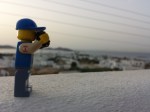
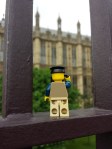
Our stops are going to include England, Greece, Italy, Croatia, and France. We will be spending a lot time in Italy, where we are going to tour around the central part of the country by car. Another main part of the trip will be on the Greek islands where we will tour about 5 different islands by ferry. Joining us on our adventure through Europe will be Mr. Lego Man, you may see him in a few of the photos, and you can look out for different outfits and accessories he will be holding in some of the pictures.

The stops I am organizing the activities for are Dubrovnik, Croatia, and one day in Venice, Italy. Dubrovnik is known for its beautiful views of the water and the large walls that surround the old part of the city. For Venice, we will be taking a boat tour of some of the islands around Venice. The two stops we will be seeing will be Burano (famous for its lace making), and Murano (famous for its glass blowing), both should be very picturesque. I am very excited for the start of our trip and our adventures in the first stop, London England!

Red Wood Cedars

On our trip I have learned a lot about Canadian history, First Nation history, and the natural history of the area of Victoria and Vancouver Island. The coolest thing we learned about were Red Wood Cedars trees. We saw some in Tofino (on a hike), some in Ucluelet (on the Wild Pacific Trail) and learned about the uses for them in the Royal Canadian Museum in Victoria. On our walk we only saw them in small groups in the most isolated of areas, having grown there undisturbed for hundreds of years. One of the reasons that Cedars live so long is because of their bark. It is very thick and most importantly, fireproof and waterproof!

Clusters of Red Wood Cedars are scarce in both Tofino and Ucluelet. Yet back when the First Nations still controlled the land, these trees were huge assets to have, both for trading and for industrial purposes. There used to be lots of Cedars in the area, but recently they have been dying off, due to the climate getting warmer. It is unfortunate because they played a major role in the survival of the First Nations, as well as early ship building and construction.

In the Royal Canadian Museum, I learned that the First Nations used the Red Wood Cedar for making many different tools and articles of clothing. Some of which are: robes, articles of clothing, rugs, bowls, hats and most importantly, canoes. The reason for using the Red Wood Cedars for making cloth, instead of animal skins, is because the cloth made with the Cedars was waterproof, and the animal skins are only water resistant. To make this miracle cloth, First Nations would weave together the fibres into a coarse “yarn” or thick strings. After that they would weave the “yarn” into cloth that was both warm, sturdy, and waterproof.

To make a boat that was water tight, the First Nations would take a whole tree, cut it in half, hollow it out, and then put on all the needed fittings that made it a real boat. Some of their larger boats would be 5-8 feet across, to be able to fit two First Nations side by side to paddle the large boats. All in all, the Red Wood Cedar is pretty amazing, so I can understand why the First Nations needed it so much. I was pretty amazed with all the things you can make out of Cedars, and now I know what to do if I’m lost in the woods; look for a Red Wood Cedar tree.

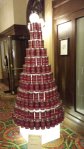
I have included some photos of a Christmas tree display in the Empress, enjoy!